

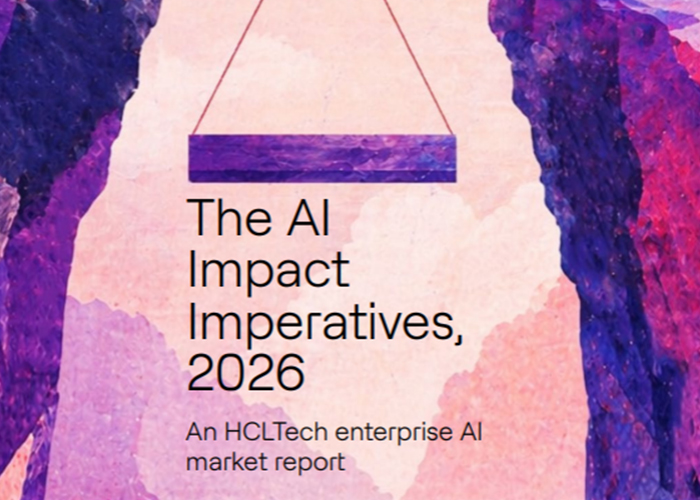
HCLTech has released a new Enterprise AI Market Report, The AI Impact Imperatives, 2026, warning of a widening gap between enterprise ambitions for AI and the ability to execute at scale.
The report is based on a global survey of 467 senior executives responsible for AI investments at enterprises with more than $1 billion in annual revenue. It found nearly 43% of major enterprise AI initiatives are expected to fail, a risk the report attributes to organisational readiness, coordination and implementation challenges rather than a lack of experimentation or access to tools.
The research also points to tightening expectations around returns. Nearly half of surveyed leaders said they expect measurable value from AI investments within 18 months, adding pressure on organisations to deliver results while adapting governance, operating models and workforce readiness.
HCLTech’s report argues that scaling AI is exposing constraints in application estates, data environments and operating models not designed for autonomous, continuously learning systems. It also highlights strategic risks for organisations that invest aggressively in AI without alignment between technology teams and business leaders.
The study identifies change management and workforce preparedness as critical but underfunded contributors to AI success. It says many organisations are deploying AI into workflows without adequately preparing employees to work alongside these systems, increasing operational and execution risks as adoption scales.
The report also flags growing enterprise interest in emerging areas such as Agentic AI and Physical AI, particularly in manufacturing, engineering and operations environments. While adoption remains early, HCLTech says these use cases raise questions around accountability, reliability and oversight.
“AI has moved from being a technology initiative to becoming an enterprise operating reality,” said Vijay Guntur, CTO and Head of Ecosystems at HCLTech. “What leaders are grappling with now is not whether AI can deliver value, but how organizations adapt their structures, decision rights and risk tolerance to keep pace with it. The pressure to move fast is real, but without the right investment in people, in helping them understand, trust and work effectively alongside AI, speed can just as easily amplify failure as success.”
You can read the full report here.