

Okta, Amazon Web Services, CrowdStrike, Databricks, Docker, Google Cloud, Lovable, Proofpoint, Salesforce, ServiceNow, Wiz and Zscaler have announced the formation of the Blueprint Alliance, a cross-industry coalition aimed at developing a shared reference architecture for securing AI agents.
The group said it was created to help organisations operate their “agentic stack” as a unified, governed system across model providers, data platforms, SaaS applications, networks and infrastructure.
The announcement points to a growing governance challenge as AI agents proliferate across enterprises. It cites a Gartner prediction that by 2028 an average global Fortune 500 enterprise will have more than 150,000 agents in use, while only 13% of organisations believe they have appropriate AI agent governance in place.
According to the Alliance, founding members have aligned on principles including treating every agent as a first-class identity, scoping access to specific tasks rather than granting standing privileges, keeping delegation traceable, monitoring runtime behaviour continuously, enabling containment that is “instant and reversible”, and ensuring governance adapts quickly.
The Alliance said it has evolved and expanded an “agentic enterprise blueprint” first introduced in March 2026 into what it describes as an open, multi-vendor reference architecture. The framework is structured around four questions: “Where are my agents? What can they do? What are they doing? How do I respond?”
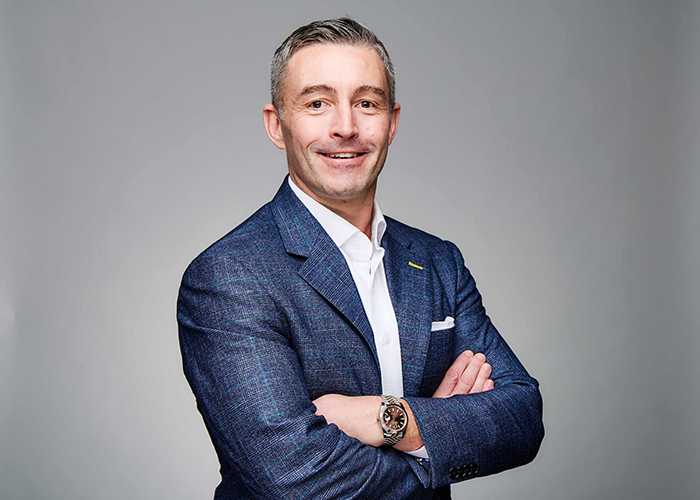
In a regional statement from Okta’s Oktane event in Las Vegas, Okta SVP and GM, Asia Pacific & Japan Dan Mountstephen said the region’s regulatory and multi-cloud complexity makes collaboration necessary. “By establishing a shared architecture alongside industry leaders, the Blueprint Alliance ensures Asia Pacific & Japan enterprises can answer the critical questions—where agents exist, what they access, and how they behave—enabling secure, compliant AI transformation at scale,” he said.
GE Appliances and World Central Kitchen have been named as strategic advisors to the Alliance. GE Appliances Chief Digital Technology Officer Mandar Deo said large-scale use of agents in manufacturing would require “strong governance” and “clear visibility into where agents operate, what they can access and how they make decisions”. World Central Kitchen CTO Brian Stoll said the organisation was adopting agentic technology for disaster response and wanted governance “as dynamic as the agents themselves”.
The reference architecture described in the announcement groups controls into four areas: discovery and identity for cataloguing agents, posture management for evaluating vulnerabilities and misconfigurations, access policy and governance to enforce least privilege, and runtime authorisation, monitoring and response to detect and contain threats such as data leakage, prompt injection and anomalous activity.
The Alliance also said it intends to pursue “deeper interoperability”, including cross-vendor signal sharing and publishing reference integrations. It named open standards including MCP, OCSF, SSF and CAEP as part of its interoperability work.
Member companies issued statements supporting the initiative, with several arguing that a shared architecture is needed because agents operate across multiple vendors’ platforms and security controls.